Resurrection
Holding Out for a Hero ▸ Stiles Stilinski (2)Resurrection names the story's most unsettling reversal: death, apparent disappearance, and bodily destruction do not necessarily end a person's presence. The state is first treated as rumor when Stiles Stilinski learns that Peter Hale is “kind of back from the dead,” but it becomes undeniable when Jackson Whittemore, killed in the warehouse, rises again as a werewolf. Resurrection therefore carries both promise and danger. It can restore a person to the living, yet the returned body is changed, and the people who loved the dead must decide whether they are witnessing recovery, transformation, or another form of loss.
Definition and First Signs
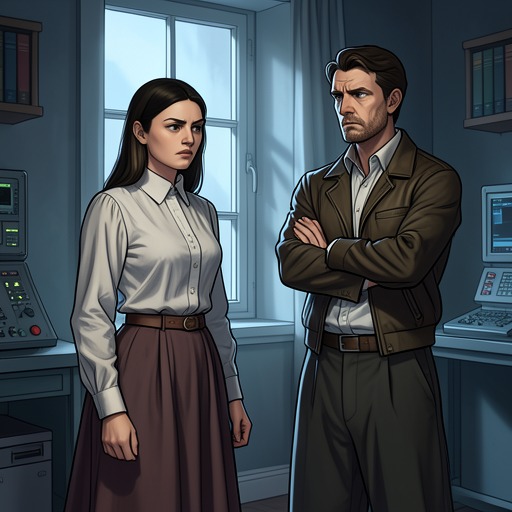
Resurrection appears against a background of repeated supernatural violations of ordinary life. In the aftermath of the warehouse crisis, Stiles Stilinski receives a message saying that something is wrong with Jackson Whittemore and that Jackson is probably still alive, while Derek Hale and Peter Hale have a plan that requires Lydia Martin. Stiles is stunned specifically because Peter Hale is supposed to be dead. Carson Bradley confirms that Peter Hale has returned, making resurrection an established condition before Jackson's fate is settled.
The earlier disappearance of Lydia Martin establishes the story's broader atmosphere of unstable presence. At the hospital, Carson Bradley hears the shower running, opens the bathroom curtain, and finds that Lydia Martin is gone. There is no connected route by which she could easily have left and no sign of her in the room. This is not resurrection itself, but it prepares the narrative's logic: bodies can vanish from apparently sealed spaces, and what looks like an ending may conceal a continuation. The same uncertainty later surrounds Jackson Whittemore, whose death is witnessed but not allowed to remain final.
Jackson Whittemore's Return
Jackson Whittemore's resurrection occurs only after he has been restored emotionally from his Kanima state. Lydia Martin uses the key to reach him, and the reptilian features begin to disappear. His eyes lose their reptilian surface even though scales still cover his skin and claws remain on his fingers. Jackson Whittemore takes the key from Lydia Martin and steps away from her, while Peter Hale watches from the side and gives the signal that initiates the next act.
Derek Hale and Peter Hale attack Jackson Whittemore from opposite directions, driving their claws through his abdomen. Scott McCall moves forward but recognizes that there is nothing he can do. The two Hales lift Jackson Whittemore on their claws, withdraw them, and let him fall. Lydia Martin catches him and lowers him to his knees. Between violent coughs, Jackson Whittemore asks whether she still loves him; Lydia Martin answers repeatedly that she does. He then collapses in her arms, and the key clatters to the floor.
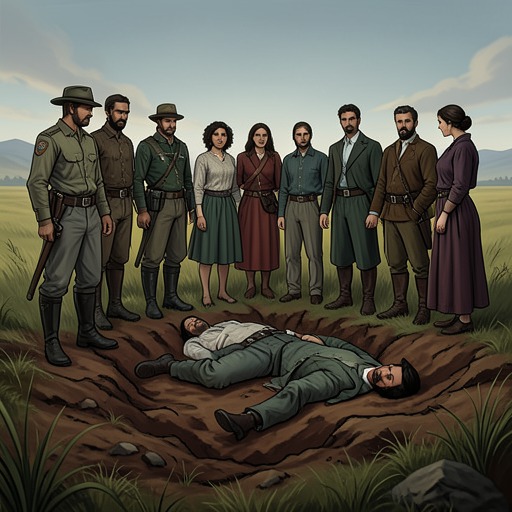
At first, the scene is presented as an unmistakable death. Jackson Whittemore's scales disappear from his face, leaving him visibly human rather than monstrous. Carson Bradley has already watched him die once, and the second death feels more real because it is no longer filtered through the distance of a lacrosse game or an apparently unreal spectacle. Lydia Martin trembles over the body, crying as the group absorbs the finality of what has happened. Resurrection is made meaningful by this pause: the text allows grief to become complete before undoing it.
The reversal begins with a small, almost imperceptible movement. While Lydia Martin's tears fill the silence, Carson Bradley hears nails scratching across the floor and sees Jackson Whittemore's hand move. Lydia Martin turns as his eyes open. Jackson Whittemore stands, arches his back in the light from Stiles Stilinski's Jeep, and fully transforms into a wolf with bright blue eyes. He howls, then retracts his claws and looks back at the group with a human face. Lydia Martin runs into his arms, and he embraces her. The returned Jackson Whittemore is alive, but he is not restored to his former ordinary condition: he has become a werewolf.
Emotional and Relational Consequences
Jackson Whittemore's resurrection changes the meaning of Lydia Martin's earlier confession. Her declaration that she still loves him is spoken when she believes he is dying, not as a strategy for survival. Because Jackson Whittemore returns immediately afterward, the confession becomes the emotional bridge between death and renewed life. Lydia Martin is no longer addressing only the monstrous Kanima or the former boyfriend remembered by the group; she is speaking to the person who emerges from both identities.
The return also redistributes the group's emotional positions. Carson Bradley retreats from the scene because the moment belongs to Lydia Martin and Jackson Whittemore, while Stiles Stilinski catches and holds Carson Bradley from behind. Scott McCall and Allison Argent hold hands. Isaac Lahey and Derek Hale stand together, watching without speaking. These arrangements place resurrection inside a communal act of witnessing: no single person controls its meaning, and each relationship registers the event differently.
The experience is especially difficult for Carson Bradley because Jackson Whittemore's return follows two apparent deaths. The first death felt unreal, like something seen on television; the warehouse death feels immediate and undeniable. Resurrection does not erase the trauma of witnessing death. Instead, it makes the witnesses carry both versions at once: the memory of a body that died, the shock of that body moving again, and the knowledge that the returned person has crossed into another supernatural state.
Peter Hale and the Reversal of Finality
Peter Hale's return functions as the earlier and more cryptic form of the same state. When Stiles Stilinski hears that Peter Hale is back from the dead, the information is delivered as something almost impossible to explain on the way to a final confrontation. Peter Hale is not merely an absent ally or a mistaken identity; his return alters the strategic balance because he is present alongside Derek Hale and participates in the plan for Jackson Whittemore.
His role in Jackson Whittemore's death complicates the apparent benevolence of resurrection. Peter Hale helps trigger the attack that kills Jackson Whittemore, yet the same sequence ultimately produces Jackson Whittemore's return as a werewolf. Resurrection is therefore not a simple restoration administered by a rescuing force. It is entangled with violence, with the Hale family, with supernatural transformation, and with decisions that place death itself inside a larger design.
Narrative and Thematic Significance
The state of resurrection turns the story's repeated encounters with death into a pattern of delayed recognition. A body can disappear, a person can be declared dead, and a witness can begin grieving before the narrative reveals that the apparent conclusion was only a threshold. Lydia Martin's hospital disappearance establishes uncertainty through absence; Peter Hale's return converts rumor into supernatural fact; Jackson Whittemore's rise makes the reversal visible in the body itself.
The warehouse sequence gives resurrection its clearest dramatic shape: recognition, apparent death, mourning, a minor physical sign, and a startling return. The scratching hand is important because it interrupts the silence before the supernatural transformation is shown. The returned figure is not a restored version of the past. Jackson Whittemore rises as a werewolf, howls, and then recovers his human face, making the new condition both frightening and intimate.
Resurrection consequently refuses a clean separation between life and death, human and monster, grief and hope. Jackson Whittemore dies as the last visible scales disappear, but he rises with the powers of a wolf. His survival offers Lydia Martin reunion rather than closure, while leaving the group with a new supernatural reality to understand. The state is thus both an ending overturned and an identity begun: death is defeated, but ordinary life is not recovered unchanged.